
Johannes Bertram
Machine Learning & Neuroscience Researcher
Understanding mechanistic models of the brain.
Machine Learning & Neuroscience Researcher
Understanding mechanistic models of the brain.
Understanding biological and artificial visual systems
I am a machine learning researcher broadly interested in understanding biological and artificial visual systems. My work focuses on mechanistic models of the brain — studying how neural populations represent and transform sensory information, and what this tells us about the computational principles underlying perception.
I am a PhD student at the University of Tübingen, IMPRS-IS, and ELLIS Tübingen, in the Machine Learning in Science Group. My research combines neural population geometry, encoding and decoding manifold analysis, and foundation models of neural activity to probe the inner workings of biological and mechanistic visual systems.
When I'm not immersed in research, I enjoy long-distance running, hiking, and the game of Go.
Building expertise across academia and industry
Principled AI Safety Benchmarking
Full-stack development of front desk automation software tools
Training Data Attribution (TDA) research, teaching assistant for graduate-level trustworthy machine learning course
Rain forecasting benchmark creation, modeling social inference, teaching assistant for cognitive modeling
Automatic in-time detection of external influences to a robot arm
Assisted in teaching linear algebra and calculus to undergraduate students
Thesis: "How Neural is a Neural Foundation Model"
Advisors: Prof. Steven Zucker, Prof. Luciano Dyballa, Prof. Martin Butz, Prof. Matthias Bethge | GPA: 4.0/4.0
Thesis: Using Epistemic Uncertainty as Intrinsic Reward for Exploration to Efficiently Learn Affordances for Action Planning
Advisor: Prof. Martin Butz | GPA: 3.93/4.0
Advancing the frontiers of machine learning
We examine a state-of-the-art neural foundation model by analyzing how its individual components respond to visual stimuli, similar to how physiologists study biological neurons. Investigating three processing stages — encoder, recurrent module, and readout — we find that each exhibits distinct representational patterns. The recurrent module outperforms the encoder by better separating representations of different temporal stimulus patterns; a tubularity metric indicates biologically plausible temporal response development; while the readout module achieves accuracy through specialized feature maps rather than biologically realistic mechanisms.
We challenge the common assumption that representational geometry reflects entire neural populations. Similar decoding behavior and high alignment metrics can emerge from small, non-representative subpopulations of neurons. We propose encoding manifolds as a complementary analytical approach, and demonstrate using a controlled MNIST experiment that decoding metrics remain stable even when encoding topology is intentionally altered during training — suggesting that similarity in decoding does not imply similarity in function or computation.
We present a method for identifying directed neural interactions from population activity recordings without assuming specific dynamic models. Using denoising score models to estimate transitions between brain states, our Score-Block Time Graphs (SBTG) approach converts these into directed edge tests, recovers the Jacobian of state transition maps under nonlinear dynamics, and separates lag-specific circuit effects. Applied to whole-brain C. elegans calcium imaging, SBTG reveals circuit structures better aligned with connectome data and demonstrates cell-type temporal organization consistent with known neuromodulator kinetics.
While Explainable AI (XAI) aims to make AI understandable and useful to humans, it has been criticised for relying too much on formalism and solutionism, focusing more on mathematical soundness than user needs. We propose an alternative to this bottom-up approach inspired by design thinking: the XAI research community should adopt a top-down, user-focused perspective to ensure user relevance. We illustrate this with a relatively young subfield of XAI, Training Data Attribution (TDA). With the surge in TDA research and growing competition, the field risks repeating the same patterns of solutionism. We conducted a needfinding study with a diverse group of AI practitioners to identify potential user needs related to TDA. Through interviews (N=10) and a systematic survey (N=31), we uncovered new TDA tasks that are currently largely overlooked. We invite the TDA and XAI communities to consider these novel tasks and improve the user relevance of their research outcomes.
Infants learn actively in their environments, shaping their own learning curricula. They learn about their environments' affordances, that is, how local circumstances determine how their behavior can affect the environment. Here we model this type of behavior by means of a deep learning architecture. The architecture mediates between global cognitive map exploration and local affordance learning. Inference processes actively move the simulated agent towards regions where they expect affordance-related knowledge gain. We contrast three measures of uncertainty to guide this exploration: predicted uncertainty of a model, standard deviation between the means of several models (SD), and the Jensen-Shannon Divergence (JSD) between several models. We show that the first measure gets fooled by aleatoric uncertainty inherent in the environment, while the two other measures focus learning on epistemic uncertainty. JSD exhibits the most balanced exploration strategy. From a computational perspective, our model suggests three key ingredients for coordinating the active generation of learning curricula: (1) Navigation behavior needs to be coordinated with local motor behavior for enabling active affordance learning. (2) Affordances need to be encoded locally for acquiring generalized knowledge. (3) Effective active affordance learning mechanisms should use density comparison techniques for estimating expected knowledge gain. Future work may seek collaborations with developmental psychology to model active play in children in more realistic scenarios.
Bridging research and practical applications

A conversational AI chatbot designed to assist patients in scheduling dental appointments, providing information about services, and answering frequently asked questions. In progress work, MVP is publicly available. Closed-source productization and deployment in progress.
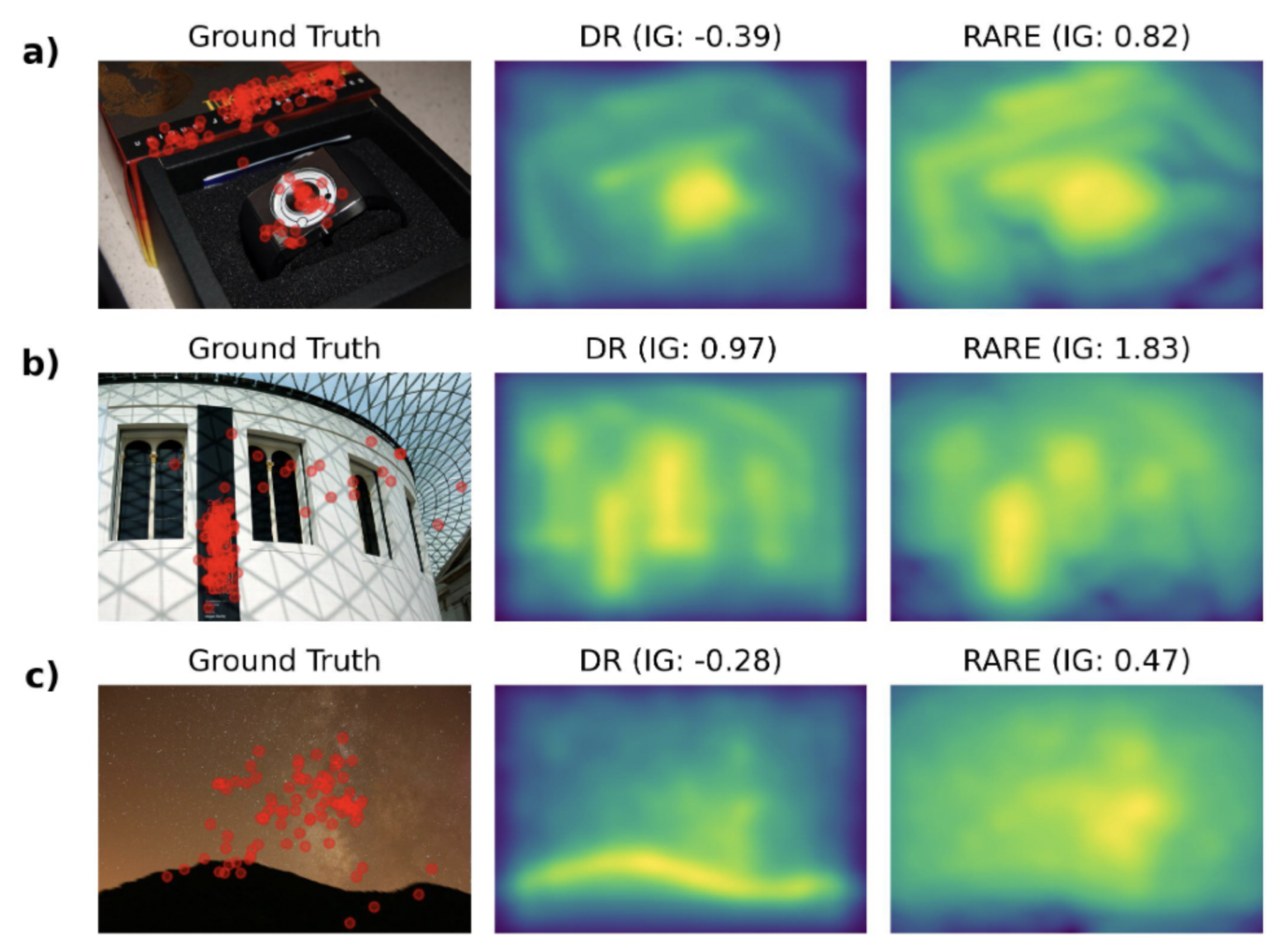
DeepRARE (Mancas, Kong, and Gosselin 2020) is a compelling approach to visual saliency prediction. It combines the traditional idea of low-level pop-out with modern high-level deep features. DeepRARE assumes high saliency for rare VGG16 (Simonyan and Zisserman 2015) features within an image without needing saliency supervision. This paper evaluates DeepRARE on the MIT/Tuebingen Saliency Benchmark (Kümmerer, Bylinskii, et al. n.d.) using the principled information gain metric and conducts a detailed error case inspection. Error case analysis reveals that human faces and text are insufficiently attended to. Adding face and text detectors improves model performance suggesting potential improvements of DeepRARE by using stronger pre-trained features. DeepRARE performs at least 15% better than low-level saliency models, but still 60% short of state-of-the-art models.
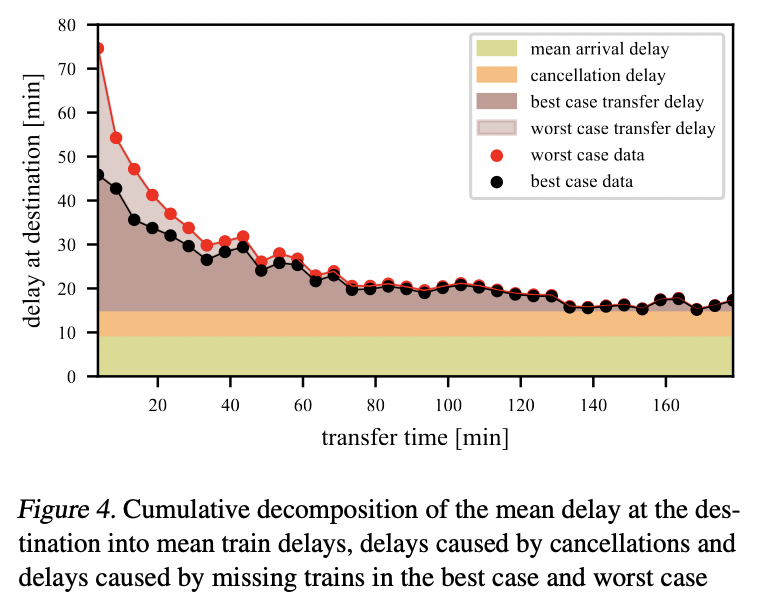
Course project for "Data Literacy" at University of Tübingen.
Let's discuss research opportunities and collaborations
I'm always interested in discussing new research opportunities, potential collaborations, or simply connecting with fellow researchers and practitioners in the ML community.
johannes.bertram@yale.edu
Tübingen, BW, Germany